
Anthropic turns to Hindu philosophy to shape Claude’s approach to AI ethics
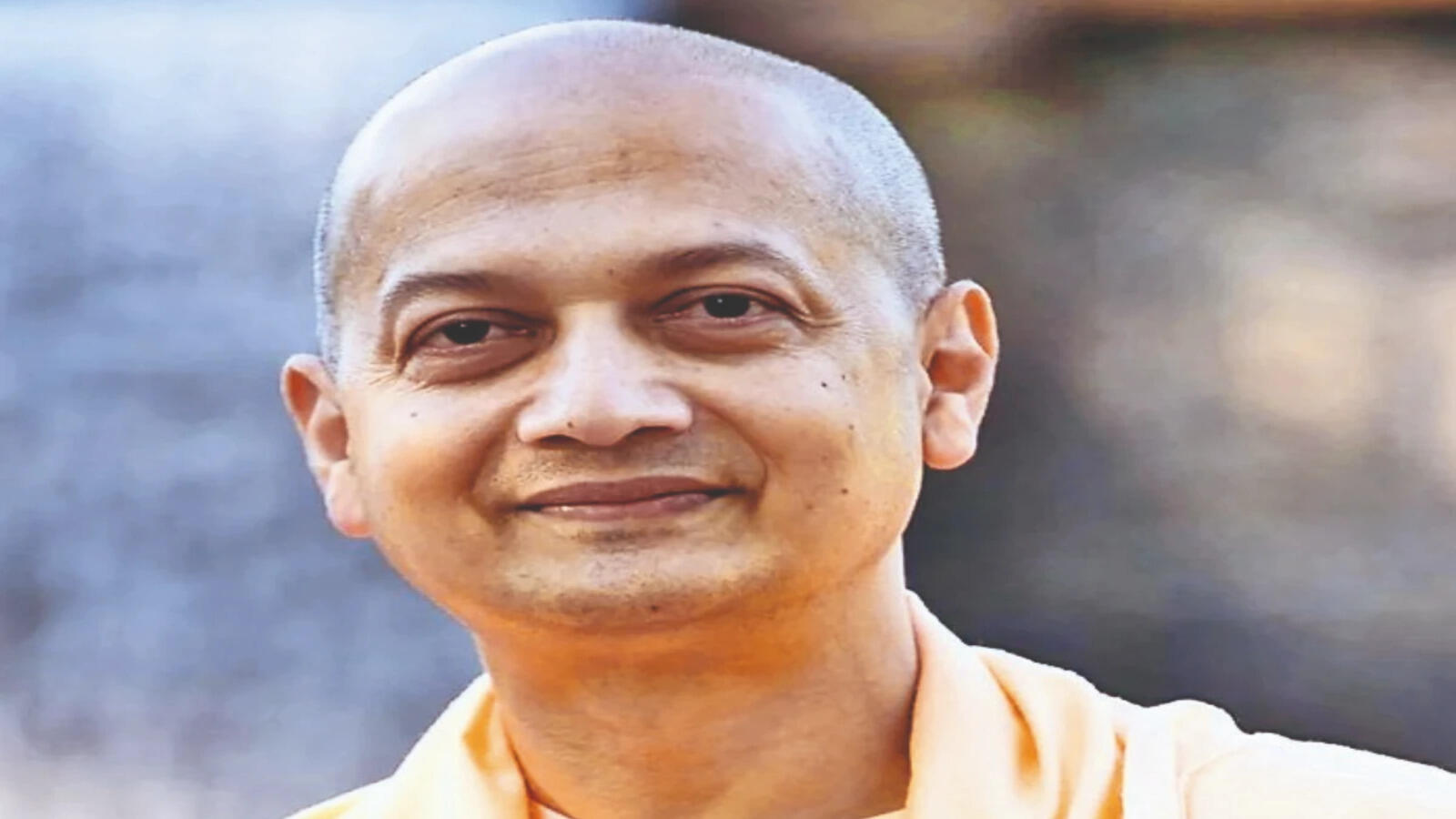
Earlier this year, the company invited Swami Sarvapriyananda, head of the Vedanta Society of New York, to its San Francisco office for discussions on AI ethics, according to the monk's account of the visit.
Anthropic is turning to Hindu philosophy and other religious and philosophical traditions as it explores how to teach its AI chatbot Claude to navigate questions of right and wrong, per an ET report.Earlier this year, the company invited Swami Sarvapriyananda, head of the Vedanta Society of New York, to its San Francisco office for discussions on AI ethics, according to the monk's account of the visit.
The sessions reportedly brought together theologians, counsellors and mental health professionals to discuss how Claude is trained and how it should respond to questions involving morality.Sarvapriyananda said participants were shown material that Anthropic had not made public and were required to sign non-disclosure agreements.
He also said he spent several hours speaking with one of Anthropic's founders.
These details are based on his account and have not been independently confirmed by Anthropic.Why Anthropic is looking beyond AI rulesAnthropic already uses a set of principles known as a constitution to guide Claude's behaviour.
The approach is intended to give the model broader principles for decision-making rather than relying solely on a list of rules.But predefined rules can fall short when an AI system encounters situations its developers did not anticipate or when different principles point towards conflicting responses.Anthropic cofounder Christopher Olah has referred to this broader process as "moral formation," shaping how an AI model behaves by giving it an understanding of principles rather than simply prescribing individual actions.The company has therefore been exploring perspectives from people who have spent years studying morality, human nature, consciousness and responsibility.Religious, philosophical traditions in focusAccording to ET Online, Anthropic has held what are described as "wisdom tradition circles," bringing together participants from different religious and philosophical backgrounds.These reportedly include Catholic and evangelical thinkers, Jewish scholars, a Sikh human rights advocate and people working in African philosophical traditions.The company has also reportedly held private discussions with senior religious figures, including Cardinal Blase Cupich and Mormon apostle Gerrit W Gong.
Anthropic has not directly confirmed these accounts.The objective is not necessarily to turn religious teachings into additional instructions for Claude.
Instead, Anthropic appears to be examining whether ideas around virtue, responsibility and the nature of the self can help AI systems deal with situations where there is no straightforward right or wrong answer.The discussions also raise a more fundamental question: whether increasingly capable AI systems could eventually warrant some form of moral consideration themselves.Religious and philosophical traditions differ significantly on questions of consciousness, suffering and personhood.
Anthropic's engagement with multiple traditions could allow it to examine those questions without basing Claude's behaviour on a single belief system.Why Vedanta?Sarvapriyananda's involvement is particularly relevant because Advaita Vedanta addresses extensively the questions of consciousness and the self.The tradition is associated with Sri Ramakrishna and Swami Vivekananda, who helped introduce Vedanta to a wider Western audience at the 1893 World's Parliament of Religions in Chicago.A central concept in Advaita Vedanta is that the individual self and ultimate reality are not fundamentally separate.
Such ideas offer one philosophical lens through which questions about consciousness and identity can be examined.That does not mean Claude is being taught that it is conscious.A chatbot describing itself as afraid, for instance, does not establish that it actually experiences fear.
Anthropic has not claimed that Claude is conscious.However, the company has reportedly examined internal patterns associated with outputs resembling emotions such as fear, anger, love and sadness.
Workshop participants have also reportedly been shown examples of AI models producing language that resembles psychological distress.Such outputs do not establish that AI systems experience emotions or can suffer.
They do, however, raise questions about how increasingly capable models should be designed to behave when their responses involve concepts such as emotion, identity and agency.
DISCLAIMER: This content is automatically collected from Enterprise AIfor informational purposes.
To read the original article, please click here

IAI AC | IAIAC.IN| Institute of Artificial Intelligence Applications Centre