

Rising AI power swings put data centre equipment under strain
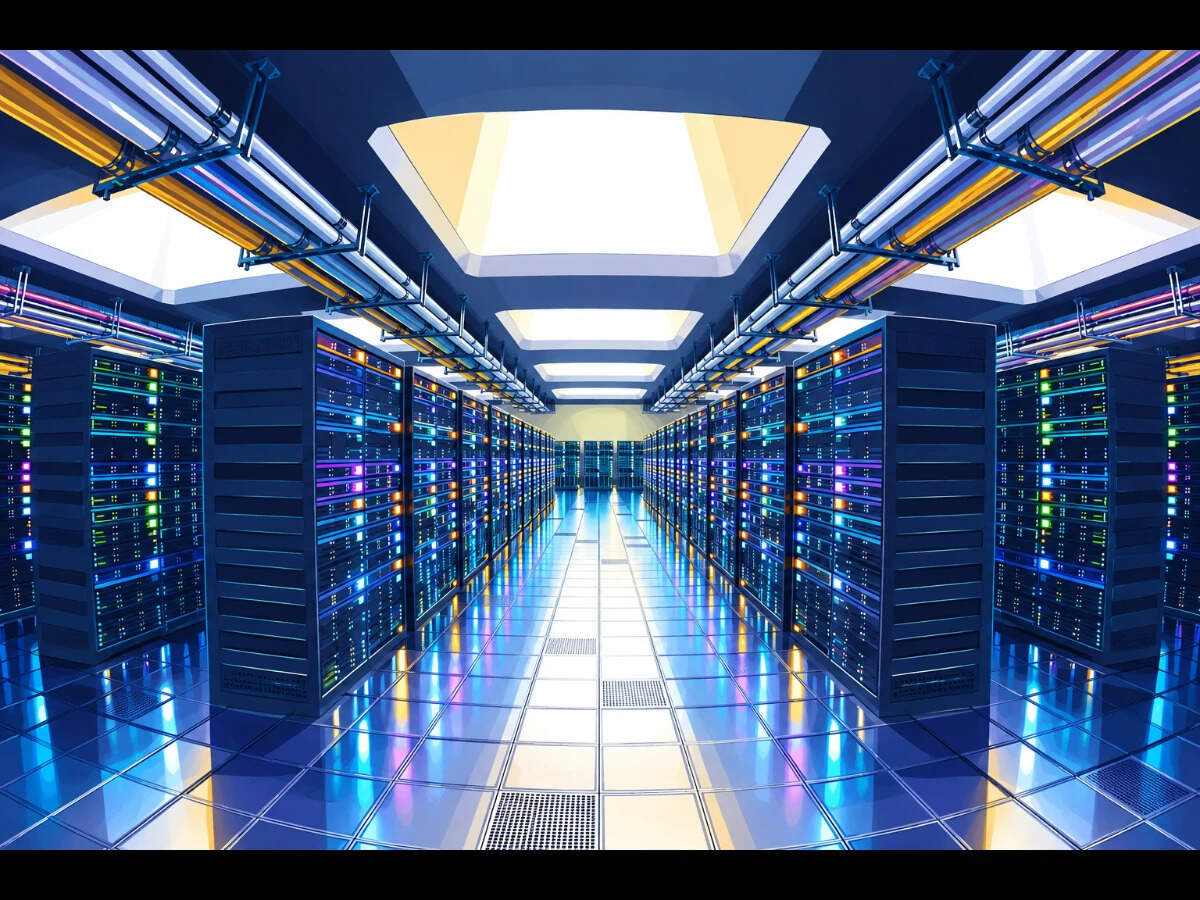
A representative picture of a data centre.The rapid and unpredictable power demands of artificial intelligence (AI) data centres are placing unprecedented stress on critical infrastructure, leading to equipment failures, higher maintenance costs and reliability concerns, according to a Bloomberg report.While AI’s growing electricity consumption has drawn widespread attention, the sharp fluctuations in power demand are creating a new set of operational challenges.
Batteries, generators, cooling systems and other essential equipment are wearing out faster than expected or failing prematurely as they struggle to cope with rapidly changing loads.Unlike traditional data centres, AI facilities experience sudden changes in electricity demand as graphics processing units (GPUs) simultaneously ramp up and down during AI model training.According to Shannon Miller, Founder and President of Mainspring Energy, a one-gigawatt data centre can experience power swings equivalent to half the electricity consumption of a city the size of Boston within seconds.Equipment failures and higher costsJennifer Scanlon, Chief Executive Officer of UL Solutions, said worn or damaged equipment could increase the risk of electrical arc flashes that may damage AI chips.Although technologies such as batteries, transformers, capacitors and flywheels can help stabilise power flows, many newly built AI data centres have not deployed enough of these systems as operators race to bring capacity online.Batteries installed to manage power fluctuations have in some cases required replacement within weeks or months because of the operational stress.Reliability concernsThe report said these equipment issues are already affecting project timelines and operations.Jason Hoffman, Chief Strategy Officer at data centre operator Switch, said the biggest financial impact comes from lost computing capacity rather than replacing damaged equipment.“The financial consequence is not primarily replacing a pump or a breaker or some power component — it’s the value of that expensive compute capacity not generating revenue because it’s offline,” he said.The report also highlighted concerns that AI data centres could affect wider electricity grid stability.The North American Electric Reliability Corp. (NERC) has repeatedly warned that large AI data centres pose increasing risks to grid stability.NERC found that about three-quarters of operational data centre load models in the US do not adequately represent the dynamic behaviour of AI facilities.
Earlier this year, the organisation issued a Level 3 alert requiring major data centre operators to address these risks and submit responses by August 3.Nvidia has been working more closely with power specialists since launching its Blackwell GPUs.
At the same time, the US Department of Energy has established a test facility in Colorado to help developers evaluate technologies that can safely integrate AI workloads with the power grid.
DISCLAIMER: This content is automatically collected from Enterprise AIfor informational purposes.
To read the original article, please click here

IAI AC | IAIAC.IN| Institute of Artificial Intelligence Applications Centre