
Why machine learning still solves most enterprise problems: Piramal Finance CDAO Markandey Upadhyay answers
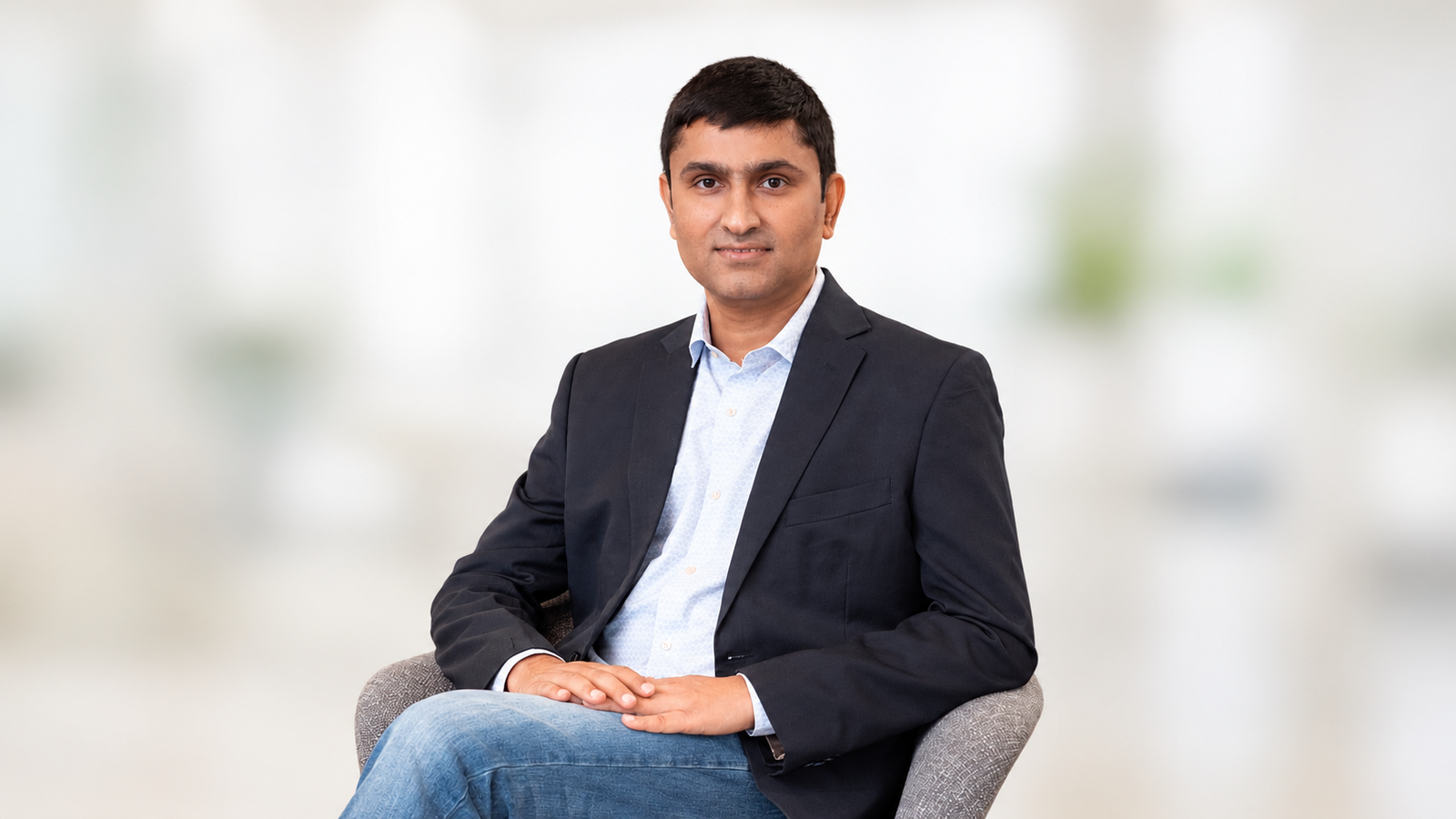
According to Markandey Upadhyay, the company’s Chief Data & Analytics Officer (CDAO), being cloud-native played a critical part in their ability to scale with AI.At Piramal Finance, monthly collections using AI have risen to ₹754 crore in Q2 FY27 from ₹300 crore in Q2 FY26, while 74 per cent of customer queries are now resolved through AI-enabled channels, up from 67 per cent.
AI-led customer onboarding has nearly quadrupled, jumping from 11 per cent to 41 per cent, and AI-driven fraud alerts have also nearly doubled from 10.9 lakh to 20.9 lakh cases, while documents scanned for tampering and fraud have increased from 1.14 lakh to 6.07 lakh.According to Markandey Upadhyay, the company’s Chief Data & Analytics Officer (CDAO), being cloud-native played a critical part in their ability to scale with AI.
Even today, many financial institutions continue to have physical servers and legacy infrastructure, which can limit their ability to deploy AI at scale.“Managing multiple physical servers and systems makes it difficult to move quickly.
AI is data-intensive; it needs to consume and process large amounts of data, and for it to be useful, things have to happen in real-time,” he said.In this interaction with ETEnterpriseAI, Upadhyay also makes a rather controversial claim.
While generative AI and AI agents have captured the narrative, according to Upadhyay, machine learning continues to power most critical financial decisions.Edited Excerpts What were some of the biggest challenges you faced while scaling these AI use cases?The biggest challenge is not building the AI model.
It is reimagining the business journey around that model.
Take bank statement analysis.
Every lending company receives bank statements and typically relies on third parties to parse and analyse them.
We built our own bank statement analyser, a bank statement transaction score and a machine learning model trained on transaction data to determine how decisions should be made.We also introduced an agent to examine anomalous transactions.
But all these capabilities had to be integrated into the actual lending journey and made available to our business rules engine and underwriters so that decisions could be made in real time.That requires working with your own source code and integrating these models into your loan origination system.
It takes time and effort.
We are currently working on a project called AI Expressway.
We are looking at the entire journey, from loan application to disbursal, and identifying different AI lanes that can support decision-making at every stage, including application processing, sanctioning, fraud detection and operations.It is essentially about reimagining the entire journey.
You have to build it brick by brick.
For a team like ours, with around 250 highly talented IIT graduates building AI models, developing the models is probably the least challenging part.
The bigger challenge is reimagining business journeys, changing processes and aligning teams.Piramal Finance has described itself as an AI-native company.
What does that mean in practice, and how is AI embedded across the business?We are an AI-native company.
We have zero physical servers, and from day one, we wanted to be AI-native.
We are very clear that we want every aspect of our business to be driven through AI.
We have more than 17,000 employees, and they should have the opportunity to use AI in their everyday work and become more efficient.
That is what everyday AI is about.For instance, bank statements have become significantly larger because of the volume of UPI transactions.
Earlier, a bank statement might have been one or two pages.
Today, it could contain hundreds of small transactions.
A human being cannot effectively examine every transaction.We have therefore built proprietary models to understand bank statements and the associated transaction risks.
A human underwriter might miss something buried in a 10-page statement, but an AI model trained to identify these patterns will not.AI in underwriting focuses on how we can improve lending decisions, while collection AI looks at how we can collect money better using AI.
Customer experience and operations AI help us manage operations and customer service more effectively.You emphasise ML alongside AI.
With all the attention on LLMs today, how much of the actual business value is still being generated through traditional ML?I might say something controversial, but most of the value being created through AI, not just in financial services but across the world, is through machine learning, particularly supervised machine learning models.If by AI you mean only LLMs, then I think we still have a long way to go.
LLMs are very good tools, but they are not, by themselves, a solution to a specific business problem.
It has to be orchestrated.For example, simply giving an LLM an underwriting problem is useless.
But if you bring together context, memory and different machine learning models for bureau scores, transaction scores, fraud scores and eligibility, and orchestrate them through an LLM, the resulting solution becomes much more reliable.For the foreseeable future, machine learning will continue to play a very important role in specific decisions because these models are trained for those particular decisions.
LLMs are not.When I say AI, I mean the careful orchestration of machine learning, reinforcement learning, and LLMs through context and memory.
In critical decision-making, the role of an LLM may be smaller than that of a machine learning model.Can you give us an example of where this combination is delivering the most value at Piramal Finance?We are a lending company, and the most important decision any lending company makes is underwriting.
So, if you ask me which is our most important AI use case, it has to be underwriting.Of course, we have several other applications.
Today, more than half a million calls are made through voice AI, ranging from welcome calls to collections.
A lot of their routine, mundane work has been reduced dramatically, allowing them to focus more on actual customer servicing.
Their productivity has increased fivefold.In collections, AI is helping us make decisions at scale.
There are instances where AI models recommend taking no action, and those decisions are equally important.
We have seen around ₹750 crore in collections associated with these AI-driven decisions.How do you see the usefulness of SLMs compared with larger frontier models, especially from a cost perspective?We love SLMs as they allow us to post-train a model and deploy it within our own infrastructure to solve a contextual problem using our own data.
If you look at our numbers, in the second quarter of last year, our token usage was 90 billion.
In the second quarter this year, it increased to 450 billion.
So, our token usage has gone up five times, but our token costs have increased by only around 50 per cent.It means that the proportion of token usage through our in-house SLMs and models has increased significantly.
We expect this trend to continue.
When we speak again next year, I would not be surprised if the ratio becomes 80:20, with around 80 per cent of our token usage coming from internal, domain-specific SLMs.What does an enterprise need to get right in terms of technology architecture, data strategy and organisational readiness before scaling AI use cases?There are three important things.
First, you have to be cloud-native.
Second, you need to own the source code of your technology systems.
If you depend entirely on third-party systems, you will find it difficult to reimagine your business journeys around AI.For example, if your loan origination system is not changing with AI, you will not get the full benefit of AI in the origination process.
Running an AI solution parallel to the existing system does not deliver the same benefits.
A third-party technology provider is unlikely to completely redesign its system just to meet the requirements of one organisation.We have invested significantly in our technology team, which develops our own software.
We have our own loan origination system (LOS), loan management system (LMS) and collection system (LCS).
Originating loans, managing those loans and collecting repayments are the three most critical activities for any lending company and we own the code for all three.Third, you need the right business ecosystem and organisational culture.
Our CEO, Jairam Sridharan, started his career in data science at a bank.
He is a very data-driven leader, and that approach percolates throughout the organisation.Many financial institutions in India still operate with legacy data and technology systems.
What challenges will they face as AI adoption accelerates?They will struggle.
There is no way around it.
Suppose you are using a third-party loan origination system where all your loans originated.
If you cannot integrate your AI models directly into that journey, how will you take advantage of AI?Keeping AI solutions outside the core business process will deliver very limited benefits.
Organisations that have legacy systems and legacy data, and do not have the ability to reimagine their business journeys for the AI era, will benefit from AI only in a very limited manner.
That is the challenge.
If you cannot change your technology and processes to accommodate AI, you will struggle to scale it.AI agents are becoming a major focus for enterprises.
How are you using agents in areas such as underwriting?In underwriting, we have multiple machine learning models.
These could be models for bureau data, bank statements, fraud, repayment capacity and eligibility.
Different agents consume the outputs of these models, and there is a master agent that brings the different inputs together.In underwriting alone, we have more than 20 to 30 agents.
These include a field investigation (FI) agent, a personal discussion (PD) agent, a telecalling agent, a bank statement analyser agent and a bureau agent.
Some agents look for signs of fraud.
All of them feed into a master agent, which helps arrive at the final decision.But these agents are not simply LLMs.
Our underwriting agents involve a careful orchestration of machine learning models, reinforcement learning and some LLMs, supported by context and memory.
That is what makes them useful for decision-making.Lastly, as you scale these agents, how are you approaching AI governance and ensuring that critical decisions remain accountable?We have an inventory of all our models and agents, which runs into a couple of hundred.
We categorise them based on their risk and importance.
Some are high-risk models involved in critical decision-making, while others perform relatively low-risk tasks or basic automation.We have also built a large hindsight review team and developed a homegrown system called DRS (Decision Review System).
All the decisions being made by these models need to be systematically reviewed.
We have a dedicated team that examines these decisions.
Wherever they find something that does not look right, feedback is systematically sent back to the model, allowing it to evolve.We have an inventory of models, a categorisation framework and a human review mechanism for critical decisions.
Most of these critical decision-making models are machine learning models, and we have a strong governance mechanism around them.The review process is also supported by AI in some areas, including AI-based judging and review.
For lower-risk models, our governance mechanisms are still evolving.
I would say it is a work in progress, but we have made a fairly good start.
DISCLAIMER: This content is automatically collected from Enterprise AIfor informational purposes.
To read the original article, please click here

IAI AC | IAIAC.IN| Institute of Artificial Intelligence Applications Centre