
Anthropic says Claude helped discover new enzyme system with CRISPR-like properties
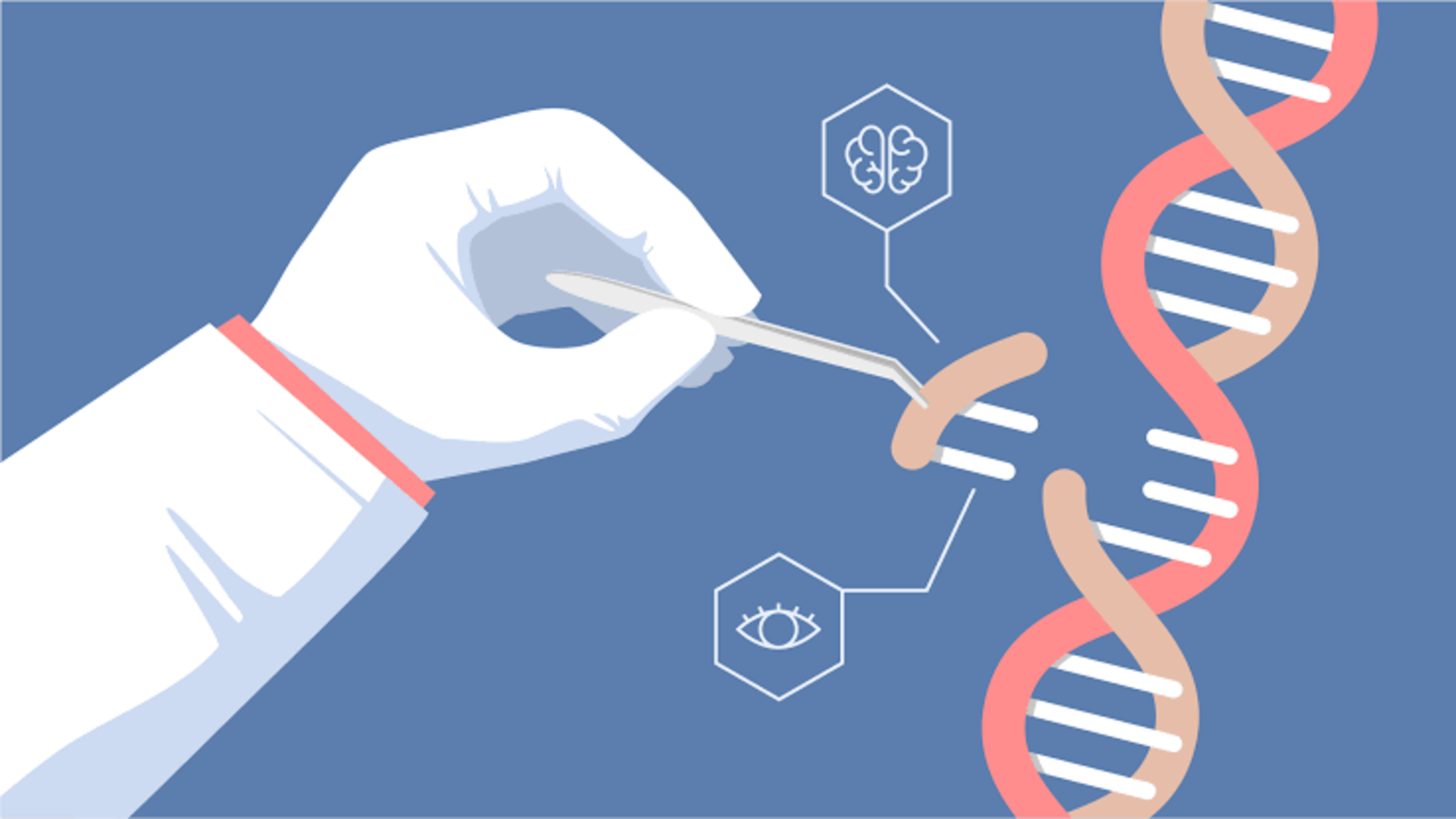
A representative picture.Anthropic has said its recently established biology lab has discovered a previously unknown enzyme system with certain properties similar to CRISPR, with its Claude AI model playing a major role in the research.The AI company confirmed last week that it operates a wet biology lab in the Bay Area, where its models are used to support physical experiments.
Anthropic now says the facility has already produced what it considers a significant discovery.The newly identified enzyme system was found in the DNA of bacteriophages—viruses that infect and replicate within bacteria—and can perform operations such as ‘cutting, copying, and pasting DNA’, according to Anthropic’s post on X.— DarioAmodei (@DarioAmodei)CRISPR is a natural immune system used by bacteria to defend against viruses and has become a widely used gene-editing technology.The significance and novelty of Anthropic’s finding will still need to be validated by the broader research community.Anthropic CEO Dario Amodei acknowledged that the discovery builds on previous research and said a Stanford team had earlier identified a system that was ‘in some ways similar to the one Claude found’.Claude spent 21 hours on the researchAnthropic said the discovery was made ‘mostly, though not entirely, by Claude’.The biology lab was established this spring, although Anthropic has not specified exactly how many months it has been operating.Claude spent 21 hours working on the research, searching through data using about 950 agents and consuming 210 million tokens.The physical laboratory experiments, however, were conducted by human scientists rather than Claude.Anthropic said its Bay Area facility operates like a typical molecular biology laboratory and conducts research only at the lower biosafety risk levels, BSL-1 and BSL-2.
It does not handle pathogens that can infect humans, and human scientists perform all laboratory work.Anthropic weighs AI’s potential in biologyThe development comes as Amodei and other AI executives have raised concerns about the potential risks posed by increasingly capable AI models and the need for safety-testing procedures.Amodei has previously raised concerns about AI potentially being used for bioterrorism.
At the same time, he has said AI could ‘cure most diseases in 5-10 years’.Anthropic has not ruled out allowing Claude to autonomously control laboratory equipment in the future.‘Eventually it may even be possible for Claude itself to safely perform the experiments by autonomously controlling lab equipment, with appropriate safeguards in place, but we aren’t doing that today,’ Amodei said.AI is already being used in biological research beyond Anthropic.
Stanford researchers have published work involving large language models and CRISPR, while researchers at the University of California, San Francisco have used AI to design enzymes from scratch.
Google launched its AI-powered biology research tool AlphaFold in 2020.
DISCLAIMER: This content is automatically collected from Enterprise AIfor informational purposes.
To read the original article, please click here

IAI AC | IAIAC.IN| Institute of Artificial Intelligence Applications Centre