
Deepinder Goyal’s Dark.ai bet: Can encrypted AI memory deliver on the promise of privacy?
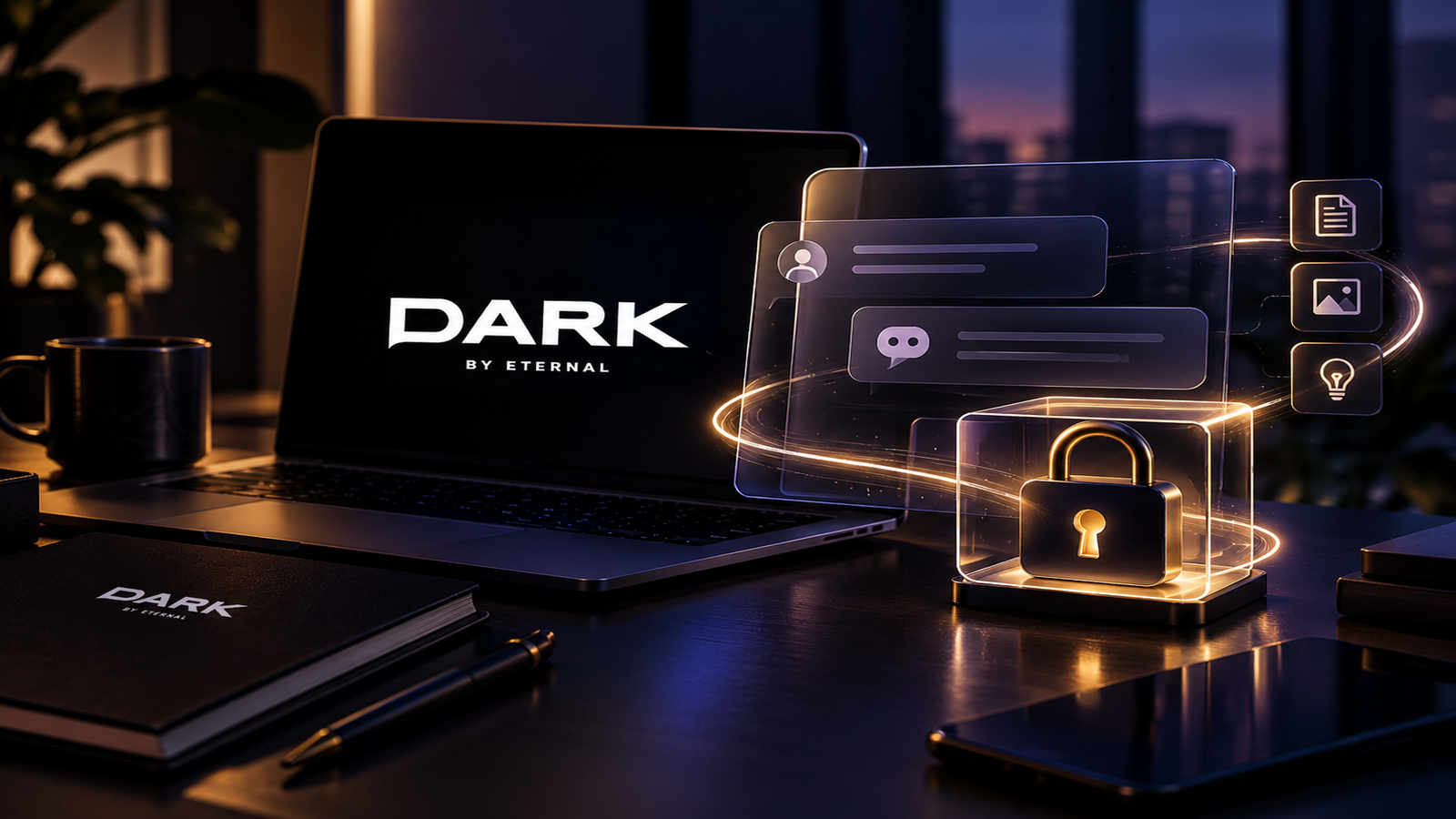
The underlying promise is to build trust by allowing users to interact openly with the AI without fearing that their personal conversations or information could be leaked.On October 21, Zomato founder and Eternal Vice-Chairman Deepinder Goyal unveiled his new AI initiative, Dark.ai, signaling the company’s attempt to join the AI bandwagon in the tech-age.
The announcement comes even as Goyal pursues other ventures, including health-tech startup Temple and aviation firm LAT.
In his letter to the shareholders, Goyal stressed on user safety and privacy as the hallmark of his new initiative.
Dark.ai is envisioned as an AI assistant that can retain the context of a user’s ideas, problems and conversations while ensuring that sensitive information remains protected. “Because all of us have a dark side, and it needs an outlet where it doesn't have to hide.
I wanted an AI which I could talk to without being judged, without any fear, and without leaving a trace,” Goyal said in the letter.
The underlying promise is to build trust by allowing users to interact openly with the AI without fearing that their personal conversations or information could be leaked.According to Goyal, Dark.ai will use fine-tuned open-weight AI models hosted on Eternal’s own infrastructure.However, it will feature a user-controlled, encrypted memory management layer that enables the AI assistant to retain context across multiple sessions while keeping users’ personal information inaccessible to the company itself.
The company has yet to disclose pricing details, complete product specifications, the exact AI models it will use, or a detailed technical architecture.
The bigger question here is whether encrypted memory and privacy-focused AI assistants represent a genuinely new technological breakthrough or are an extension of existing technologies gaining traction amid growing concerns over AI safety and data privacy.
Is Dark.ai breaking new ground in AI?Data leakage involving AI systems remains a major concern across industries.
While users and organisations also want their conversations with AI assistants to remain secure and confidential, they also expect these systems to retain context from previous interactions.
Such continuity can help users build on earlier discussions, develop ideas and translate them into actionable plans in the real world.
Goyal’s announcement of Dark.ai appears to address both concerns through encrypted memory: the AI assistant would retain information shared by users across conversations while keeping that information private.However, the technical implementation raises questions about what the company’s privacy assurances mean in practice.
Venkat Ramana, CEO of ValuePitch, said that “we cannot read your conversations” is a claim that cannot be true in the way most people would interpret it. “A language model needs access to the conversation in plaintext to process a prompt and generate a response.
The key question, therefore, is not simply whether Eternal’s servers process the conversation, but whether the company can access, store or retrieve its contents,” he explained.
The key questions are whether the conversation can be accessed outside a secure hardware environment, how long the data is stored and who controls the encryption keys.
Goyal’s shareholder letter does not clarify these details as of now.
Until the company provides these answers, Dark.ai’s privacy assurances remain promises, despite Goyal’s criticism of other AI companies for making similar claims.
Ramana also believes the open-weight decision is the strongest part of the bet.He said hosting fine-tuned open-weight models on in-house infrastructure can reduce reliance on third-party APIs, improve control over data retention and allow greater model transparency.
With the performance gap between open and closed models narrowing, personalisation and information retrieval may matter more for AI assistants than benchmark scores. “However, this approach requires significant investment in GPUs, specialised talent and frequent model upgrades, making it a capital and engineering trade-off rather than a privacy issue,” he added.
The challenge of secure AI memory The upcoming initiative is noteworthy for its promise to combine user privacy with persistent AI memory, allowing the assistant to recall information shared across conversations.
In short, an AI assistant must differentiate between information useful in the long term, context relevant only to the current conversation and details that should never be stored as persistent memory.Another challenge is the risk of AI systems retaining incorrect information or inferences about users, which could influence future interactions.
Subramaniam said, “I would treat memory less like a database and more like a living layer that needs to be reviewed, updated and sometimes forgotten.”Research on large language model (LLM) memory also points to the need for more granular user controls, allowing individuals to decide what an AI assistant remembers, edits or deletes.Memory is where Dark.ai’s privacy promise faces its biggest test.
While persistent memory allows an AI assistant to retain context across conversations, it also creates a valuable repository of user data that could be targeted by attackers, accessed by insiders or sought through legal orders.According to Ramana, genuine user control means encrypting memory with keys held by users themselves and allowing them to view, edit, delete and export their data. “If the server decrypts stored memories each time it generates a response, the privacy protection ultimately depends on the security of the hardware enclave rather than encryption alone.
Eternal must clearly explain these safeguards to substantiate its privacy claims,” he added.AI experts and industry leaders say privacy-focused AI is not new, pointing to Apple’s Private Cloud Compute, WhatsApp’s Private Processing and Proton’s Lumo as existing approaches to protecting user data.They argue that Dark.ai’s real differentiator would be transparency, including publishing its technical architecture, undergoing independent security audits and clearly explaining its data-logging practices, compliance with CERT-In's 180-day rule and what it does with a Section 69 decryption request.
DISCLAIMER: This content is automatically collected from Enterprise AIfor informational purposes.
To read the original article, please click here
IAI AC | IAIAC.IN| Institute of Artificial Intelligence Applications Centre