
UPI to go agentic? User trust and platform competition come into focus
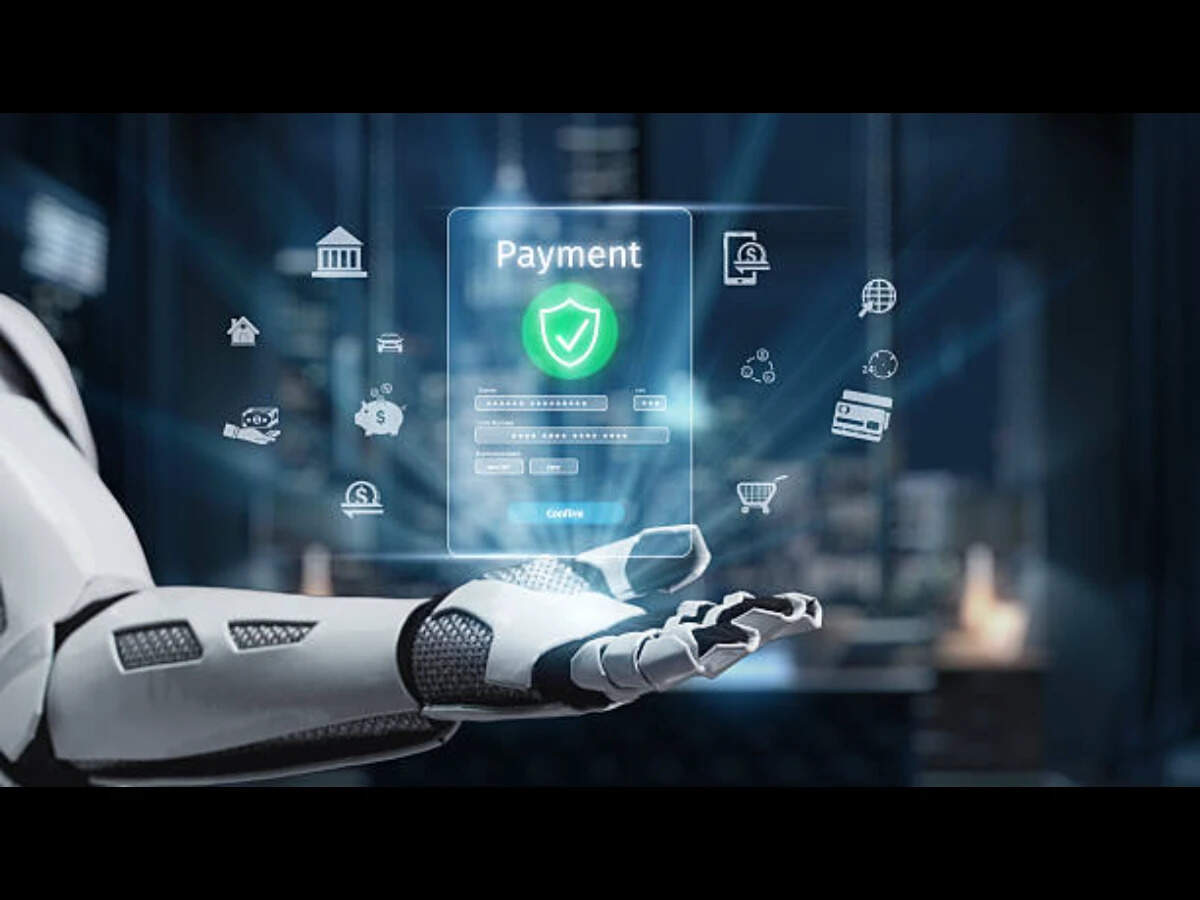
It is still unclear whether these AI agents will be limited to recurring payments or extend to routine, everyday transactions– the core use case of UPI.
Would you let AI agents do low-ticket transactions on your behalf?
Going by the recent Reuters report, UPI users will soon get this option as the National Payments Corporation of India (NPCI) is preparing to launch AI agents to do small UPI transactions without explicit user approval each time.
According to the report, the Unified Agent Protocol (UAP) is expected to be released next week at the Global Fintech Fest in Mumbai.
Besides coming across as a natural evolution towards frictionless and rule-based commerce, the move might also trigger trust deficit issues among its huge user base of 55.49 crore (as of June 2026).In August 2026, UPI processed a record 24.51 billion transactions worth ₹29.8 lakh crore.
Nitesh Thakur, Chief Product Officer at Enso Webworks, which works closely on developing AI-driven products, believes the shift should not be viewed through a narrow lens.He argues that this should not be seen as eroding user trust or shrinking UPI’s user base; rather, it should be evaluated for its potential to enhance convenience too. “In payments, multiple verification steps or “handshakes” already exist.
With AI, these could become more refined and filtered.
AI could also help identify users and flag unusual or automated transactions, informing both customers and organisations about ongoing activities,” said Thakur.
It is still unclear whether these AI agents will be limited to recurring payments or extend to routine, everyday transactions– the core use case of UPI.
ETEnterpriseAI’s email to NPCI seeking details of the move did not elicit a response.As the framework has not yet been released, Thakur noted that ideally an AI agent on UPI would operate within defined boundaries, be trained to follow strict rules without exceeding them, and undergo extensive testing before deployment.
According to Deepak Gupta, an AI architect and technology expert, this new AI agent coming on UPI will revolve around convenience and control. “Users will get convenience for sure, in a way that the AI agent will handle payments and, for instance, book a hotel/flight from a travel platform and complete the payment as well.
This will make users feel at ease, but what if it books a business class flight instead of economy?
That is where the importance of control over this agent comes in,” said Gupta.He said trust and control will be key to driving adoption of the protocol among UPI’s vast user base, noting that stronger guardrails will be needed, but the convenience it offers is likely to make it widely popular.
Understanding agent paymentsUPI works as a series of activities.
A user initiates a transaction, after which UPI runs backend checks for fraud, processes the payment, and then returns a confirmation receipt.Avijeet Singh, Co-founder, Vortx.Ai talks about a globally accepted protocol known as X402.
Currently, UPI works in a serial mode; a series of steps complete a transaction.“In the case of agents, it will move towards a single endpoint or a unified API, where all payment details are carried together.
It won’t involve multiple steps, just one or two actions to send the details and receive the confirmation,” he explained.He further notes that as UPI introduces features to support AI-agent-led payments, applications are likely to evolve into a dual-agent architecture, one consumer-facing and another operating at the backend for execution and coordination.Singh adds that this is among the latest developments in payment technology.The competition question Along with having an enormous user base and a vast transaction history, UPI acts as the main driving force for users across several domestic and global fintech platforms such as Paytm, Google Pay, and PhonePe.
The arrival of AI agents is also raising questions around whether they will be enabled primarily for recurring payments or for every individual transaction, and how they could reshape competition among major UPI-based payment platforms.Experts believe that, as of now, there is also a distinction between free and paid AI systems.
Paid systems tend to be more reliable, accurate, and secure.
Similarly, for financial systems like UPI, high-grade, well-trained models would likely be used and safer.
If users want to buy something, they will not need to leave the platform.
It becomes a one-click activity, either through a wallet or by directly connecting UPI.
Payments will happen within the conversation itself,” he noted.
DISCLAIMER: This content is automatically collected from Enterprise AIfor informational purposes.
To read the original article, please click here

IAI AC | IAIAC.IN| Institute of Artificial Intelligence Applications Centre