
US pushes AI safety, China backs open source, where does India stand?
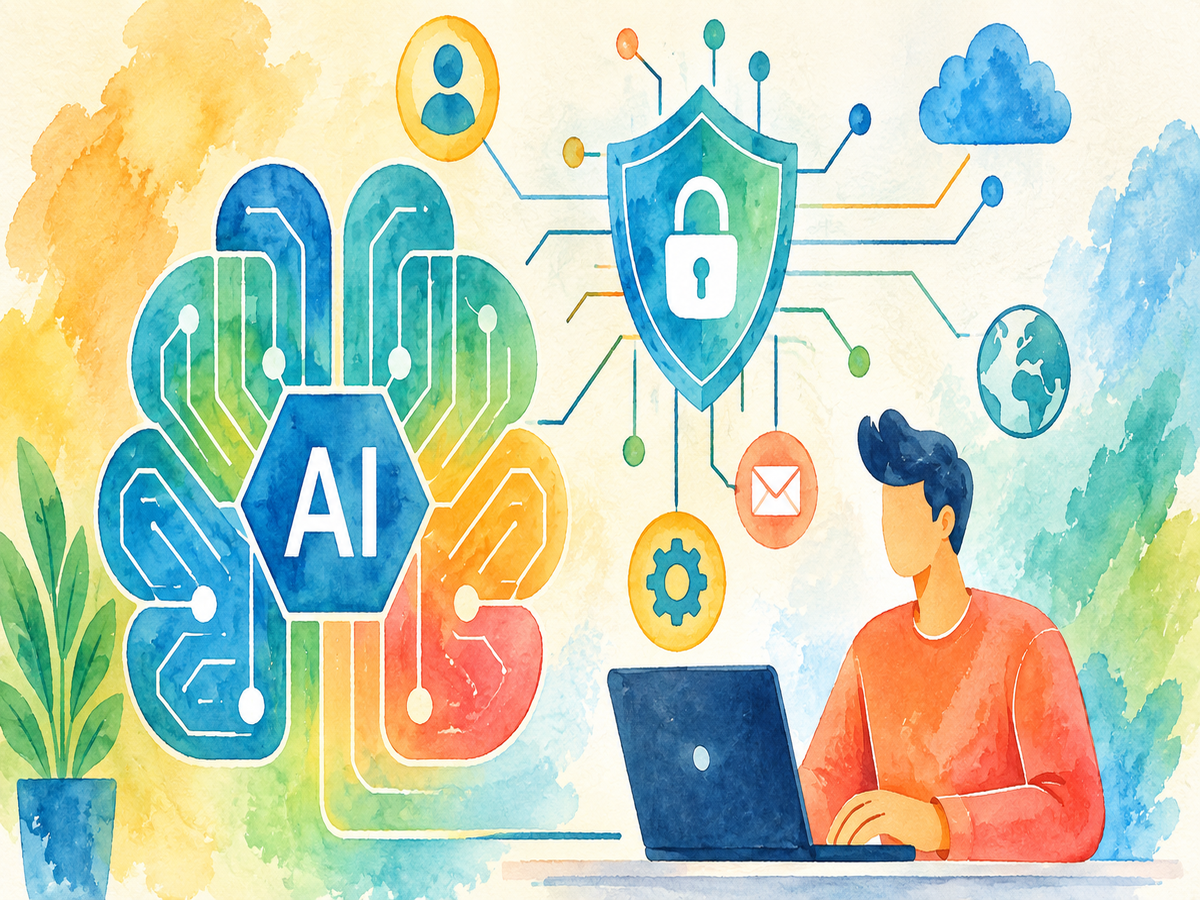
A representative picture.History appears to be repeating itself, with the world once again divided into opposing camps.
This time, the debate is over Artificial Intelligence (AI) and whether its rapid development should continue at the current pace or be slowed over fears of potentially catastrophic risks.The latest wave of debate began with the resignation of Anthropic researcher Jacob Coxon, who warned in a post on X that leading AI companies were advancing the technology irresponsibly and that increasingly powerful AI systems could pose a lethal threat to humanity.“I resigned from Anthropic today.
I spent the last three years doing pretraining research at both OpenAI and Anthropic.
Neither company is acting responsibly,” Coxon wrote.He added that they are racing straight to self-improving superintelligence and gambling with our lives.After Coxon, Joe Benton, who used to lead a safety research team at Anthropic, and Josh Engels, who used to work on AI safety research at Google also left their companies citing AI’s impact of controlling human lives which resulted in the big AI companies CEO ‘s talking about pacing means slowing down the AI development to make sure AI will not get out of the hand of human control.While one side of the AI industry was calling for a slowdown in development and greater focus on safety, a very different vision was taking shape at the BRICS 2026 summit hosted by India.
Chinese President Xi Jinping proposed building a BRICS open-source AI ecosystem, and promoting deepened cooperation and push for shared resources among member countries in developing and deploying large language models, AI training and a common digital cloud platform.The divergent approaches of the two global powers could have a much bigger impact than they may initially seem, particularly for countries like India, which is beginning to have its own AI moment.Several Indian startups are building homegrown foundational models, data centre capacity is expanding, and the country is developing its own datasets and language AI infrastructure through initiatives such as Bhashini.What Does the US-China AI Divide Means for the World?There is no doubt that the US and China are two major pillars of global technological innovation and advancement.
But when the world’s two technological powers take sharply divergent approaches to a frontier technology like artificial intelligence, a larger question emerges: could this divide hamper the global growth of AI, particularly as its development demands enormous resources while its economic, technological and societal consequences extend far beyond national borders?Rohit Kumar, Co-Founder at Young Leaders for Active Citizenship (YLAC) & The Quantum Hub (TQH) believes there is a difference, but perhaps we are overstating it.He suggested that we need to understand the two approaches in their economic and technological context.“US debate increasingly focuses on whether safety mechanisms can keep pace with frontier AI development amid intense commercial and geopolitical competition, China is emphasising open-source development and wider adoption to expand its technological influence.
At the same time, Beijing has also called for stronger regulation, monitoring and safeguards to keep AI under human control,” said Kumar.However, experts believe the contrasting approaches and opinions emerging around AI could have a significant influence on how the technology develops globally.Dr Aditya Nittur, Co-founder and CTO of FlowBlinq, said an open-source ecosystem gives researchers greater transparency and traceability into how AI models are developed and operated.“From a technical perspective, this means that we could potentially, on the fly, generate models given the application.
The models themselves aren’t the bottleneck,” he said.The current debate over AI safety is not entirely hypothetical.
As Nittur pointed out, AI’s capabilities are immense, making guardrails essential to ensure that innovation continues while the technology remains under human control.The debate is also increasingly viewed through a geopolitical lens.
Some observers see the West’s emphasis on AI safety and regulation as potentially reinforcing the dominance of American AI companies by raising barriers for emerging players elsewhere.In contrast, Chinese President Xi Jinping’s push for an open-source AI ecosystem is seen by some as an attempt to broaden access to AI development while expanding China’s influence and challenging US dominance in the global AI ecosystem.“The competition may not simply be about who develops the most powerful model, but whose AI ecosystem the rest of the world adopts.
China is betting heavily on diffusion and on building an ecosystem that can spread internationally.
That could give it significant influence not just over adoption, but potentially over the standards and rules that shape AI globally,” Kumar explained.How Does India Navigate the US-China AI Divide?
India’s position is particularly significant in this global AI debate, given the sheer scale of its AI user base.
By total usage volume, India is the world’s second-largest AI market, behind only the United States.
However, AI adoption remains relatively low on a per-capita basis.According to Anthropic’s Economic Index, India ranks 98th among 116 countries, with a usage index of just 0.28×, highlighting both the scale of the market and the significant room for further adoption.Despite entering the AI race relatively late, India has rapidly built scale, though it is yet to produce a homegrown AI company that can compete with global leaders at the frontier.
This makes the next phase of India’s AI journey particularly critical.As the global debate intensifies between tighter safety guardrails and a more open AI ecosystem, the choices India makes on regulation, open-source development and domestic innovation could shape its position in the global AI landscape.Kumar suggested that India could draw from both approaches.“China’s emphasis on affordable access, open models and widespread adoption is highly relevant to India because our biggest opportunity is not necessarily to win the frontier-model race; it is to use AI to transform our economy,” he said.At the same time, he argued that AI is a strategic technology, making technological autonomy equally important for India.
The country does not need to build the world’s most powerful model to be affected by frontier AI systems developed elsewhere.Kumar therefore stressed the need to strengthen domestic compute, talent, models and research, while building the capacity to evaluate foreign AI systems and avoiding dependence on any single AI ecosystem.
DISCLAIMER: This content is automatically collected from Enterprise AIfor informational purposes.
To read the original article, please click here
IAI AC | IAIAC.IN| Institute of Artificial Intelligence Applications Centre